On Death Part II
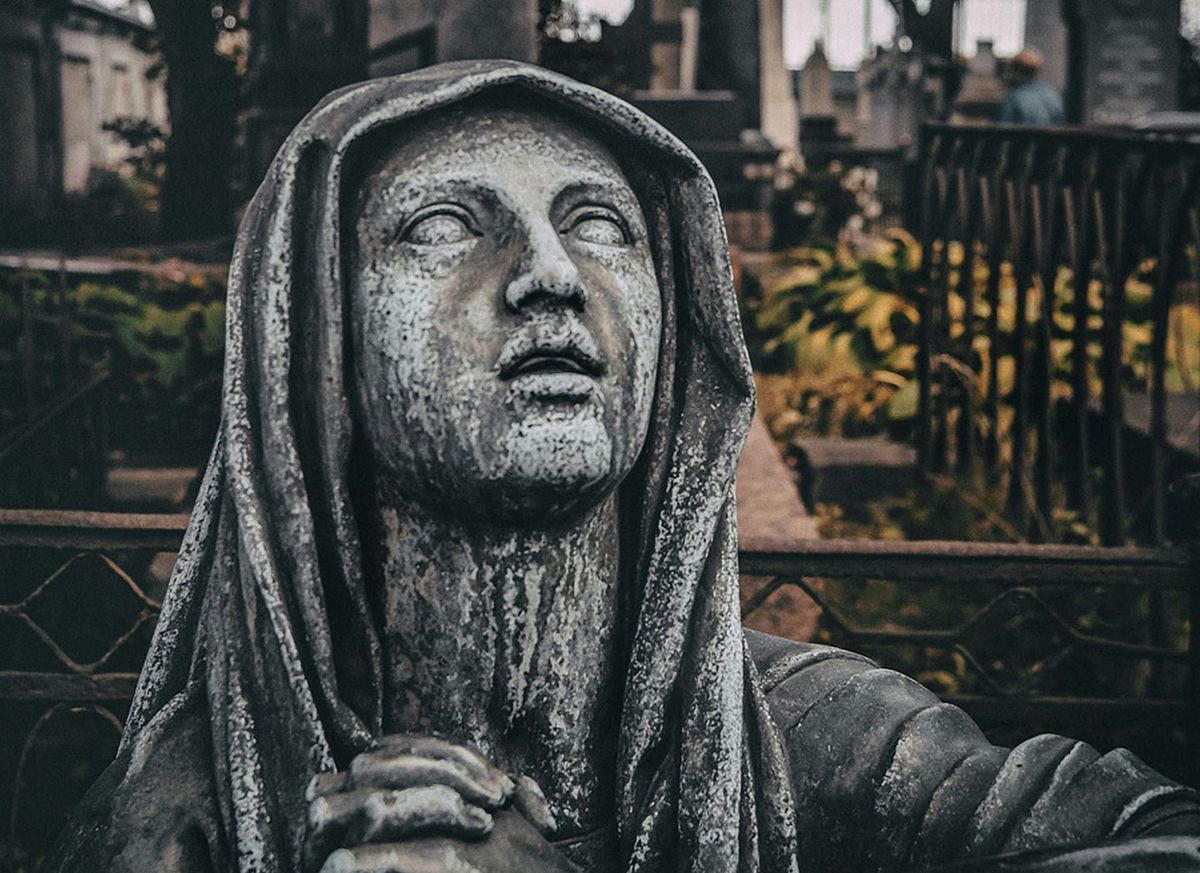
It’s been a while since I began this reflection in On Death, which, if you’ve not read may be pertinent to this one. And yet things have changed so much, and I’ve been pondering the work of the disincarnate and the dead and the healing of the line and all of that work of October and November lately as I draw it into my art, and embed it in the skin of other human beings. So it is time, I think, finally, to continue this pontification.
What Death is I asked, in my last writing on the subject, and yet I never really ventured to answer that question beyond its necessity in the continuation of life processes. However, another angle I failed to mention was the metaphorical Deaths: the Deaths we experience in life. For instance, what is Death to a community? What is a living death, one we regenerate or are reborn from? What are we to the so-called “dead”, the disincarnate[1]? And finally, what are we when we find ourselves feeling closer to them, and more able to listen? Is that closeness the same as “living” in the everyday sense of the word, or is the thinning of the veil perhaps a closeness our selves experience with the process of death?
First: on personal death and rebirth
Perhaps you’ve yet to experience the sensation that you are no longer, that in fact what is experiencing walking around and going through life is truly nothing, a completely frameless hollow being uncertain of its role or place in the networks around it. However, if you have come through this state (or are perhaps on its precipice or currently within it) and found or are finding the new framework for being, a new role and place within the networks around you, you may feel capable at this point at creating a container for the whole experience and saying “that was a little bit like dying, I suppose, and now it’s like I’m a whole new person”.
Sometimes we experience several such deaths throughout our life. For me, I experienced a kind of death right before I left Michigan that lasted until I moved from Oceanside to Los Angeles to move in with my current partner — the circumstances of all of these shifts were complicated and I do not wish to get into detail here — walking around in nothingness for about two years. There was another perhaps even more grievous death that occurred when I had my first child and became not just a person but a mother and simultaneously the kind of matriarch of the space we were at that time just building. It is these moments when we are wrenched from our sense of Self, boiled down, and reconstituted from the experiences that occur preceding this dissolution and in the midst of it. While folks take psychedelics and describe the oft-misunderstood concept of ego death, this death-like experience of total dissolution is not necessarily the same as a momentary experience where you recognize that you are one with and a part of everything else. It is not necessarily the recognition that the Self is an illusion, nor is it even the intentional or unintentional removal of your individual Will as it pertains to desire for individual goals[3]. It is more involuntary, it happens when your place in the relational net of things changes so intensely that the illusory Self dissolves whether you wish it to or not, whether you’re on board with it or not. And it isn’t that the kinds of revelations deep, long term meditation practices or psychedelics or ascetic practice often bring cannot occur, but that that isn’t the point.
What is this death, and why do we seemingly lack a better metaphor for it? I suppose one could call it metamorphosis, but isn’t that the same thing? The caterpillar never returns, but transmutes. It decays, and regrows a new body. So do we, though perhaps in a more internal way.
What are the ramifications of this, I wonder, for speaking with the dead or the disincarnate? Are we closer to That then This in those times?
I think perhaps we are. People speak of how infants in the house bring all kind of nosy spirits around, and thus the postpartum mother as well, for both mother and child are infantile for a time: the immediately postpartum mother at once helpless and in need of care as she is simultaneously also the (mostly) sole source of care for the infant. When I was in this state, both times (though the true death only happened once as I crossed that first threshold into motherhood) I experienced visions, visitations, nightmares and unwanted clinging beings all around. Chalk it up to mental health, postpartum anxiety, whatever you want: pathologize if you must. But for me it was more than psychosis[2]. This was an experience of existing in the wall between walls, that space between brick and board in all houses, of being a shadow. A ghost, even while still living.
Continuing: on community death and rebirth
A more challenging continuation of this thought, for me, has been that of the simultaneous collective death experienced by communities, groups, or movements. I’ve actually been struggling to come up with the words to even encapsulate what I mean by this, but I suppose let’s try:
In Oceanside, where I’m originally from, there is a neighborhood called “East Side”. They call it pozole which is an ironic and affectionate name because of, supposedly, a lady and her soup cart from back when much of the surrounding area was farmland. Once, I’ve been told, the whole area was basically entirely Latino, with Carlsbad being white and Samoan largely. And then Camp Pendleton, the Marine base was established, and some gear shops and other things popped up that were decidedly not Latino. Slowly things have changed, until now Oceanside is basically indestinguishable from San Clemente or Laguna Niguel or much of coastal Orange County. East Side still exists, and some buildings there are run by descendents, but the shape of it all has changed. Gangs that once fought for territory now reign supreme — not because they “won” but because the other neighborhood doesn’t exist anymore. They’re the last holders of the channel, the only ones left.
Perhaps the community hasn’t died yet, but it’s in its final throes it seems, and in time it will be erased like so many other such communities here in California. So goes the coal towns, the steel cities like Gary, the vast Indigenous empires of the Americas. But what is Death? And what of the underlying ideas of the communities and their collective thoughts when they finally succumb to that great regulator?
At this stage I have few real answers to these questions, but wonder if we aren’t all considering them as we consider collapse and this idea that our civilization is not as immutable, secure, or lasting as we once thought. At the same time, collapse is perhaps not on the horizon so much as the death of something that is ready to die, that is singing its swan song, that is perched to decay and fertilize something new.
Because all of this talk of death generally in our culture connotates some permanence: we talk about our ancestors as though they are not yet rejoined with some source, as though they retain their human characteristics perpetually, we speak of them as though they are out there, beyond rather than considering them in a constant cycle of returning. How do we treat each other if you are the reincarnation of my lost best friend from childhood? My grandmother? My beloved pet? Death is never permanent, except for body, and even then. My grandfather’s ashes were scattered in the Pacific Ocean off of the pier in Oceanside, spread by the waves and surviving in each drop, or settled down to the bottom and aiding sea plants in their own cyclical momentary existence. No, he, himself, will never exist in that form again, but in some other? Of course. Each and everything is temporal, of a moment, and so too are our communities. And perhaps we, and they, and all of this will perish some kind of death.
But we can rest assured that we will fertilize something new, and I wonder how much power we have now to sow the seeds of the future forests, to determine what comes after.
That is all for now, though I am spending this month listening to a lot of stories from new people, hearing about their ancestors and how they’re honoring them this month and feeling into this season of death. I am also dying with the sun, retreating into reflection and honesty and re-evaluating all of the words I’ve said over the years and all of the things I’ve done, and preparing to fertilize something altogether new come Spring.
So, to you I ask: what comes next? For you, for us broadly?
Until next time ~
Notes
- The terms dead and disincarnate are not always one in the same. Those who are dead are now disincarnate, but the disincarnate also refer to those who were never incarnate in human form, as well as those who well may be living in a disembodied or otherworldly form that we cannot technically consider living in the same way as "the living".
- See notes on the definition of psychosis and the potential harms of constantly pathologizing so-called divergent experiences in On Context and Psychosis
- The concept of "ego death" is so complicated to explain in the words I have for it and I don't know that any of the three representations I've put here of what folks think it means are actually touching its real meaning, as derived from Eastern traditions, but they are representing what it means to us popularly as Westerners which I think is still valuable in this context specifically as even if we have bastardized a term that represents a nuanced concept from another culture, the concept itself is not missing from our lineages either, we just perhaps have yet to stumble on its original name and therefore will of course keep stumbling around it as we try to reach the center of being able to transmit this idea linguistically. I think folks who've experienced this or studied this or practiced this (because it is a practice and not an endpoint) probably understand what it is I'm trying to get at here. Anyway, I digress.